
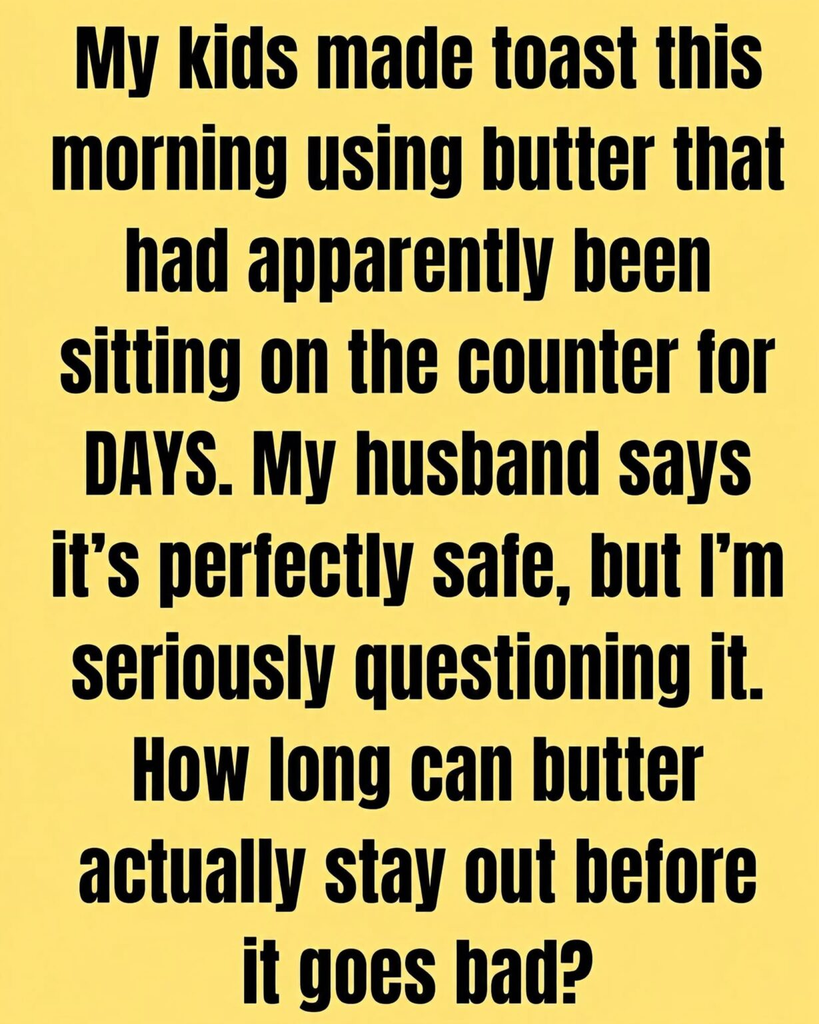
Butter is one of those foods that seems to start an argument in almost every kitchen.
Some people keep a dish of butter on the counter because they like it soft and easy to spread. Others put every stick straight into the refrigerator and would never leave dairy sitting out.
So, who is actually right?
The answer is a little more complicated than simply saying butter belongs in the fridge.
Butter is different from foods like milk, cream, yogurt, and soft cheese. It contains a lot of fat and much less water, which makes it harder for many bacteria to grow. Because of this, butter can usually handle being at room temperature for a short time.
But that does not mean you can leave it on the kitchen counter forever.
The temperature of your kitchen, the type of butter, how you store it, and how long it stays out all matter.
If you love soft butter, you can still keep a small amount ready to use while keeping the rest refrigerated.
Why Can Butter Stay Out?
Butter is made by churning milk or cream until the fat separates from the liquid.
The finished butter is mostly fat, with smaller amounts of water and milk solids.
That low moisture level is important because many bacteria need enough available water to grow. Butter simply isn’t as friendly to bacterial growth as many other dairy products.
Salted butter has another small advantage. The salt can make it harder for some microorganisms to grow.
Still, butter isn’t completely protected from contamination.
Bacteria can get onto butter from dirty hands, knives, countertops, or other foods. Butter can also lose its quality over time.
It may develop a stale or rancid smell and taste unpleasant even if it doesn’t look very different.
That’s why there is a difference between food becoming lower in quality and food becoming unsafe.
How Long Can Butter Stay on the Counter?
This is where things can get confusing.
You may have heard that butter can stay out for several days. However, a more cautious approach is to keep room-temperature storage to roughly one or two days, especially when following current food-safety advice.
A simple solution is to take out only the amount you expect to use within that period and leave the rest in the refrigerator.
Your kitchen temperature also matters.
Leaving butter in a cool room is very different from leaving it beside a hot stove during summer.
If your kitchen is warm, the butter is close to an oven, or sunlight is hitting the container, refrigeration is the safer choice. Heat can make butter soften quickly and can also speed up quality loss.
So there is a big difference between keeping a small covered dish of butter on a cool counter for a day and leaving an entire package sitting beside a sunny window for several days.
Is Salted Butter Better for Counter Storage?
Salted and unsalted butter are not exactly the same.
Salted butter contains salt, which can provide some protection against microbial growth. This is one reason people often prefer salted butter when keeping a small amount at room temperature.
Unsalted butter doesn’t have that extra factor, so keeping it refrigerated when you’re not using it is generally the better option.
That doesn’t mean unsalted butter suddenly becomes unsafe the moment it gets warm. It simply isn’t something you should leave sitting out for long periods without a good reason.
If you use unsalted butter for baking, you can simply soften the amount you need before using it.
What About European or Cultured Butter?
Specialty butters can have different characteristics.
European-style butter often has a higher milk-fat content than many standard butters. Cultured butter is made using fermented cream, which gives it a slightly tangy flavor.
These differences can affect the butter’s taste, texture and moisture.
However, you shouldn’t assume that a specialty butter can safely remain at room temperature indefinitely.
Always check the storage instructions on the package. If the manufacturer recommends refrigeration, follow that advice.
When you’re unsure, keeping it cold is the easiest way to protect its quality.
How Should You Store Butter on the Counter?
If you want soft butter for toast, pancakes, vegetables or other foods, you don’t need to leave an entire package uncovered.
Put a small amount in a clean, covered butter dish instead.
A lid protects the butter from dust, insects, kitchen debris and accidental contact. It can also stop butter from picking up strong smells from nearby foods.
Keep the container somewhere cool and away from:
- Direct sunlight
- The stove or oven
- Steam
- Hot appliances
- Areas where water frequently splashes
- Strong-smelling foods
A simple covered dish is usually enough.
Just remember to clean it regularly. Old butter residue shouldn’t be allowed to build up inside the container.
Are Butter Bells a Good Idea?
Butter bells and butter crocks are popular because they help keep butter soft while protecting it from the surrounding environment.
Traditional butter bells use a small amount of water as part of the seal. The butter sits inside the bell while the base holds the water.
It sounds simple, but cleanliness is important.
If you use one, change the water regularly and clean the container according to its instructions.
A dirty butter bell can defeat the whole purpose of keeping your butter protected.
For many people, a basic covered butter dish is easier.
Should Butter Always Be Refrigerated?
For longer storage, the refrigerator is still the safest and most reliable choice.
Keeping butter cold slows down changes in quality and helps it stay fresh for longer.
You can keep most of your butter refrigerated and only remove a small amount when you want soft butter.
This is especially useful if you don’t eat butter very often.
Instead of leaving a whole package on the counter for days, put only a few tablespoons into your butter dish at a time.
Need Soft Butter Quickly?
You don’t always have to wait hours for refrigerated butter to soften.
There are several easy ways to speed things up.
Cut It Into Small Pieces
Cut the butter into small cubes or thin slices.
Smaller pieces warm much faster than a whole stick. Depending on the temperature of your kitchen, they may become soft enough to use within about 10 to 20 minutes.
Grate It
A box grater can turn a cold stick of butter into tiny shreds.
Because the pieces are so small, they warm very quickly. This can be especially useful when you suddenly realize you forgot to soften the butter before baking.
Use the Microwave Carefully
The microwave works, but be careful.
Cut the butter into pieces and use a low-power or defrost setting. Heat it for very short periods and check it after each one.
Be careful not to melt it completely.
Soft butter and melted butter behave differently in many baking recipes, so accidentally melting it can change the texture of your finished food.
Try a Warm Glass
There is another simple trick.
Fill a glass with hot water and let it sit for a short time. Empty the water and dry the glass.
Then turn the warm glass upside down over the butter.
The trapped heat can gently soften the butter without directly heating it.
How Do You Know When Butter Has Gone Bad?
Butter doesn’t always spoil in an obvious way.
One common problem is rancidity. Over time, exposure to air, light and heat can cause the fats in butter to break down.
The butter may develop a strange smell or unpleasant taste.
Watch for signs such as:
- A strong or unusual smell
- A stale or rancid odor
- An unpleasant taste
- Mold
- Major discoloration
- Other unusual changes in appearance or texture
If your butter clearly smells or tastes wrong, don’t try to save it.
And remember that normal appearance and smell don’t guarantee that a food is completely free from harmful microorganisms.
Does Butter Follow the Two-Hour Rule?
You’ve probably heard that perishable foods shouldn’t stay at room temperature for more than two hours, or only one hour when temperatures are above 90°F.
That general rule is important for many foods, including meat, cooked leftovers, milk and other highly perishable products.
But butter is different.
Its high fat content and low moisture make it more resistant to bacterial growth than many other dairy foods.
So if you accidentally leave your butter on the counter during breakfast or forget to put it away after cooking, there’s no need to panic.
That doesn’t mean every dairy product can be treated the same way.
Milk, cream, soft cheese and many prepared foods need much stricter temperature control.
What If You Leave Butter Out Overnight?
Leaving a covered stick of butter on the counter overnight is not the same situation as leaving milk or cooked meat out overnight.
Because of its composition, butter can generally tolerate short periods at room temperature, especially in a cool kitchen.
Still, look at the conditions.
Was the room cool?
Was the butter covered?
Was it sitting in direct sunlight?
Was it close to the stove?
Was it repeatedly touched with a knife that had been used on other foods?
All of these things can affect the quality and cleanliness of the butter.
If your kitchen is very hot or the butter has been sitting out longer than recommended, putting it back in the refrigerator is the safer choice. If it has obvious signs of spoilage, throw it away.
What About Homemade Butter?
Homemade butter requires a little more care.
Commercial butter is made under controlled conditions. Homemade butter can contain more leftover moisture depending on how thoroughly it has been washed and prepared.
If you make butter at home, use a reliable food-safety method and keep it refrigerated unless you have specific guidance that says otherwise.
The same caution applies to homemade or minimally processed dairy products. Don’t automatically use the same storage rules that apply to commercially produced butter.
The Bottom Line
So, can you leave butter on the counter?
For a short period, generally yes.
Butter’s high fat content and relatively low moisture make it less suitable for bacterial growth than many other dairy products.
If you like soft butter, keep a small amount in a clean, covered dish and use it within a day or two. Keep the rest refrigerated.
Store the dish away from heat, sunlight and moisture, and clean it regularly.
If your kitchen is very warm, refrigeration is the better choice.
And if the butter develops a strange smell, bad taste, mold or other obvious signs of spoilage, don’t take a chance. Throw it away.
Keeping butter soft doesn’t have to be difficult. A little attention to temperature, storage and cleanliness can give you the convenience of spreadable butter without leaving the entire package sitting on your counter for days.

Dedicated and experienced pet-related content writer with a passion for animals and a proven track record of creating engaging and informative content. Skilled in researching, writing, and editing articles that educate and inspire pet owners. Strong knowledge of animal behavior, health, and care, combined with a commitment to delivering high-quality content that resonates with audiences. Seeking to leverage writing skills and passion for pets to contribute to a dynamic and mission-driven team.