
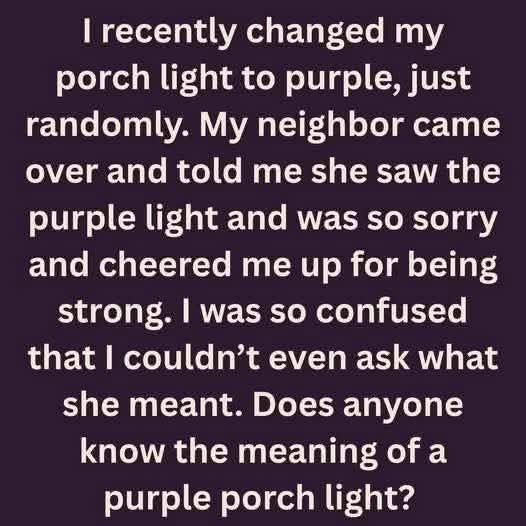
You may have spotted it while passing through a quiet street after sunset—a gentle purple glow spilling from a front porch. At first glance, it might look like a style choice. Maybe seasonal décor. Maybe someone experimenting with lighting. But in many cases, that purple light isn’t decoration at all.
It’s a message.
Not a loud one. Not one that demands attention. But a message rooted in bravery, survival, and solidarity.
A Quiet Light With a Powerful Voice
Purple porch lights have come to represent support for people who have lived through domestic abuse. Without a single word, they communicate something deeply important:
You’re not invisible. You’re not alone. And help exists.
So many survivors endure abuse in silence—behind closed doors, behind rehearsed smiles, behind lives that look “normal” from the outside. The purple glow cuts through that silence. It offers reassurance in a world where speaking up can feel dangerous.
It says, “This is a place where you are believed. Where your pain matters. Where hope still has room to breathe.”
Why Purple Matters
Purple has long been associated with resilience, dignity, and inner strength. It is widely recognized as the color of domestic violence awareness, used to honor survivors and remember those who didn’t make it out.
More than anything, purple represents endurance—the courage it takes to survive abuse and the strength required to rebuild a life afterward. When that color shines from a porch, it becomes more than light. It becomes a public refusal to ignore abuse.
Violence That Blends In
Domestic violence doesn’t always leave visible marks.
It doesn’t only exist in chaotic homes or unsafe neighborhoods. It can be present in houses with trimmed lawns, smiling families, and closed curtains. Abuse affects people of every age, gender, race, and economic background.
And it isn’t limited to physical harm.
Abuse can take many forms:
• Emotional control
• Constant verbal attacks
• Financial restriction
• Sexual pressure or coercion
• Psychological fear and intimidation
Many survivors remain quiet because they feel ashamed, afraid, or trapped. Some worry they won’t be believed. Others don’t know where to turn. That’s why visible signs of support—like a purple porch light—carry so much weight. They offer recognition. They say someone is paying attention.
Where the Movement Came From
The idea gained traction through awareness efforts like “Purple Light Nights,” which encouraged communities to display purple lights during Domestic Violence Awareness Month in October. What began as a simple act of solidarity quickly spread.
Street by street, city by city, the purple glow became a shared language. A way to start conversations. A reminder that awareness doesn’t have to be loud to be effective.
Today, flipping a porch light to purple is a promise—to stand with survivors and against abuse.
More Than a Symbol
That small change in color often sparks curiosity. People ask questions. They look it up. They talk.
And those conversations matter.
They help people understand how abuse begins, how it escalates, and why leaving isn’t as simple as it sounds. For some, the purple light is their first real introduction to the reality of domestic violence. For others, it’s an opening to share their own story.
Supporting Survivors Beyond the Light
While the purple bulb is meaningful, real change requires action. Support can take many forms:
Learn and Share
Understanding the warning signs of abuse and its long-term impact helps break cycles of silence. Talking about it spreads awareness where it’s needed most.
Support Organizations on the Front Lines
Shelters, hotlines, and advocacy groups save lives every day—often with limited resources. Donating, volunteering, or even sharing hotline information can make a difference.
• U.S. National Domestic Violence Hotline: 1-800-799-SAFE (7233)
Listen With Compassion
When someone trusts you with their story, listen. Don’t judge. Don’t rush solutions. Belief and empathy can be lifesaving.
Speak Up
Challenging abusive behavior—whether among friends, coworkers, or family—helps disrupt patterns that allow harm to continue.
Looking Toward Prevention
Raising awareness is vital, but preventing abuse before it starts is the real goal.
That means:
• Teaching what healthy relationships look like
• Encouraging honest communication at home
• Holding abusers accountable
• Rejecting harmful ideas about power and control
Ending domestic violence isn’t the responsibility of survivors alone. It’s a collective effort that begins in everyday choices and conversations.
When You See That Purple Glow
Don’t dismiss it as a design choice.
Understand that it stands for something deeply human—a refusal to look away, a sign of hope, and a reminder that silence protects abuse. That light may belong to a survivor. Or someone who helped another escape. Or someone who simply wants others to know they care.
Either way, it carries a promise: You matter. Help exists.
And for someone passing by who’s suffering quietly, that single light might be the first moment they feel seen.
One Light Can Start Change
The fight against domestic violence needs all of us. Whether you’ve lived it, witnessed it, or want your community to be safer, your role counts.
Change the bulb. Start the conversation. Share resources. Support survivors. Listen with empathy.
Because sometimes, a small light is enough to guide someone out of the darkness.

Dedicated and experienced pet-related content writer with a passion for animals and a proven track record of creating engaging and informative content. Skilled in researching, writing, and editing articles that educate and inspire pet owners. Strong knowledge of animal behavior, health, and care, combined with a commitment to delivering high-quality content that resonates with audiences. Seeking to leverage writing skills and passion for pets to contribute to a dynamic and mission-driven team.