
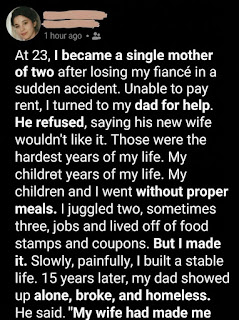
At twenty-three, everything I thought my life would be shattered in an instant. One day I was dreaming about the future with a partner by my side, and the next I was standing alone, responsible for two small children after an unexpected loss. Grief didn’t arrive with drama—it slipped in quietly and settled deep. Life didn’t slow down to give me space to mourn. Rent was still due. Diapers still needed buying. Food still had to be put on the table. When the pressure became unbearable, I swallowed my pride and asked my father for help. His answer was short and unemotional. He said no. That moment hurt more than I was ready to admit, not just because of the struggle ahead, but because it confirmed how completely on my own I really was.
The years that followed demanded everything I had. I became an expert at surviving on very little—counting coins, juggling jobs, and learning how to make scarcity look like stability. Exhaustion became familiar. So did worry. Some nights I lay awake wondering if I was failing, if love alone could carry us through. But my children were my anchor. Their small hands, their laughter, their trust in me gave me a strength I didn’t know I possessed. I learned how to be resourceful, how to endure long days, and how to keep moving forward even when hope felt thin. Slowly, step by step, I built a life that stood on effort rather than luck.
Fifteen years passed. Somewhere along the way, survival turned into confidence. My children grew into kind, capable people—not defined by hardship, but shaped by resilience and love. I found stability in my work and peace within myself. The pain of the past didn’t disappear, but it softened. It became part of my story instead of the thing that defined it. I stopped measuring success by money or approval and started measuring it by independence, calm, and self-respect.
Then one evening, my father showed up at my door.
Time had not been gentle with him. He looked tired, smaller somehow, worn down by circumstances he couldn’t control. He spoke quietly, explaining how his life had fallen apart and how alone he now was. As I listened, I felt something surprising—not anger, not bitterness, but clarity. I understood then that forgiveness isn’t about excusing the past. It’s about choosing what kind of person you want to be now.
I chose compassion—not because it was owed, and not because it erased old wounds, but because hardship had taught me the value of empathy. My story was no longer about being abandoned or struggling to survive. It had become a story of endurance, growth, and learning that real strength lies in choosing kindness after you’ve already learned how to stand on your own.

Dedicated and experienced pet-related content writer with a passion for animals and a proven track record of creating engaging and informative content. Skilled in researching, writing, and editing articles that educate and inspire pet owners. Strong knowledge of animal behavior, health, and care, combined with a commitment to delivering high-quality content that resonates with audiences. Seeking to leverage writing skills and passion for pets to contribute to a dynamic and mission-driven team.