
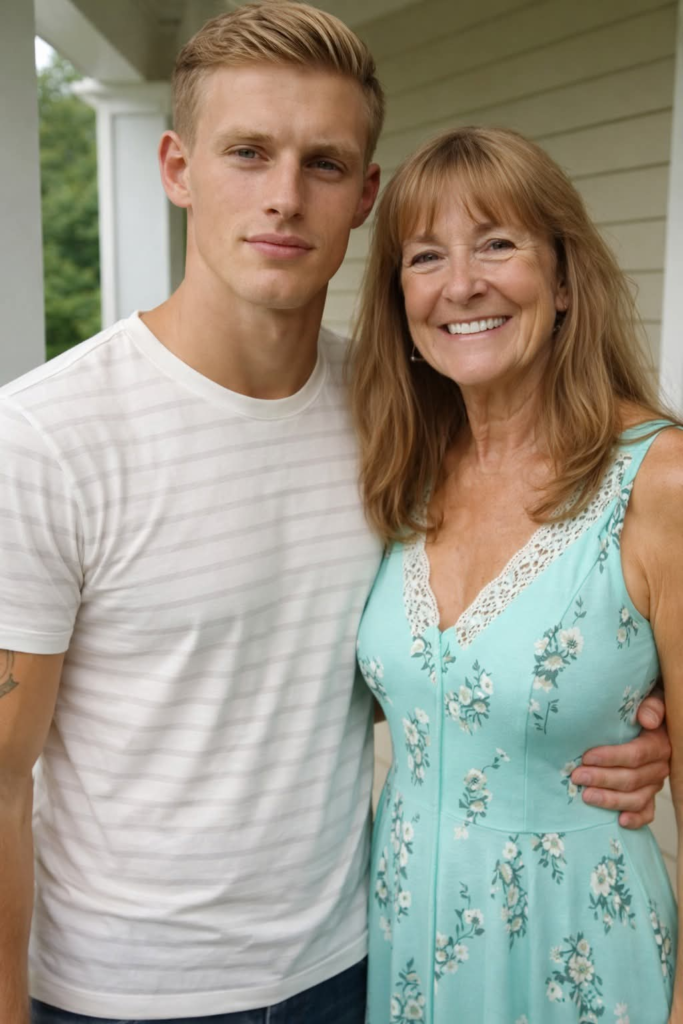
When my mom told me she was engaged at forty-five, I forced a smile and hugged her.
I had spent years encouraging her to find someone. After my parents divorced, the house had grown unbearably quiet for her. Their separation hadn’t devastated me the way people warn it will devastate children. If anything, it felt like relief. They had been roommates pretending to be partners, and the tension in that house had been worse than the split itself.
So yes—I wanted her to be happy.
But the first time I met her fiancé, something inside me tightened.
It wasn’t anything specific. He hadn’t said anything wrong. He hadn’t behaved badly. It was just a weight in my chest that refused to lift. The kind of instinct you can’t explain but can’t ignore either.
Before she met him, I’d even helped her set up a dating profile. I remember sitting beside her at the kitchen table, swiping through endless faces that didn’t seem quite right. She wasn’t looking for fireworks. She was looking for someone to share dinner with. Someone to fill the silence.
I couldn’t always be that person. I was struggling myself—bouncing between unstable jobs and saving every spare coin for a dream I’d had since my twenties: opening my own restaurant.
Then one evening she called, her voice lighter than I’d heard it in years.
“I met someone,” she said.
She sounded hopeful. Almost shy.
She invited me over to meet him. On the way, I bought a bottle of wine I couldn’t really afford. It meant stretching my budget thin for the week, but I wanted to show up as the supportive daughter. I rehearsed polite questions in my head. I told myself I’d keep an open mind.
All I knew was his name—Halcy—and that he was a pastry chef.
When my mom opened the door, she looked nervous. Not about him—about me. She needed my approval more than she wanted to admit.
Then I walked into the dining room.
A man stood near the table, tall, self-assured, and far younger than I expected. For a split second, I assumed he must be someone’s son.
I leaned toward my mother and whispered, “You didn’t tell me he had a child.”
She blinked at me. “That’s Halcy.”
The room seemed to tilt.
He stepped forward, extended his hand, and introduced himself warmly. I barely responded. My shock quickly turned into anger.
How could she? He looked closer to my age than hers. My mind raced with ugly conclusions. I didn’t hear his tone. I didn’t register his politeness. All I saw was risk.
I raised my voice. I questioned her judgment. I accused her of being naïve. She tried to explain that age wasn’t the point—that they connected, that he made her feel alive again.
I wasn’t listening.
When she calmly added that they were engaged and planning to marry in two months, I felt something snap. I left in the middle of dinner, convinced I was the only one thinking rationally.
The weeks after were tense. I couldn’t shake the suspicion that he was after something—money, stability, a shortcut to comfort. I told myself I was protecting her.
So I changed tactics.
If I couldn’t stop the wedding outright, I’d gather proof. I started showing up. I helped with planning. I tasted cakes. I attended venue meetings. All while watching him closely.
He never faltered.
He was steady. Respectful. Patient with my coldness. If he noticed my scrutiny, he didn’t react. That almost bothered me more.
As the wedding day approached, doubt crept in. What if I had misjudged him? What if my fear had created a villain where none existed?
On the morning of the ceremony, my mom realized she’d left her phone at home. I offered to retrieve it. It felt like a small way to be useful.
At the house, while searching for the phone, I opened a locked drawer in her desk.
Inside were documents—loan statements, property papers, financial records. Halcy’s name appeared repeatedly. My pulse thundered in my ears. I was sure I’d found what I’d been looking for.
Debt. Transfers. Legal paperwork.
This was it, I thought. Proof.
I gathered the papers and rushed back to the venue, heart pounding with a strange mix of dread and triumph. I interrupted everything. In front of family. In front of guests.
I confronted them.
But the story I had built in my head unraveled in seconds.
The debt was real.
But it wasn’t for him.
It was for me.
They had been quietly purchasing a small restaurant space. My dream location. The loans were investments. The property transfer included my name. Halcy had even planned to leave his current job and work there alongside me, refusing a salary until it turned a profit.
The room felt smaller. My certainty collapsed into humiliation.
I hadn’t saved my mother from heartbreak.
I had nearly caused it.
She looked at me not with anger first—but with hurt. Deep, quiet hurt.
The ceremony paused, but it didn’t end. They went through with it.
That day changed something in me. I learned that love doesn’t always fit the shape we expect it to. That age gaps don’t automatically equal manipulation. And that fear can disguise itself as loyalty.
I thought I was protecting her.
In reality, I was protecting my own comfort—my belief that I understood what was best.
Watching them exchange vows, I realized something difficult but necessary:
Sometimes the people we love don’t need rescuing.
They just need us to trust them.

Dedicated and experienced pet-related content writer with a passion for animals and a proven track record of creating engaging and informative content. Skilled in researching, writing, and editing articles that educate and inspire pet owners. Strong knowledge of animal behavior, health, and care, combined with a commitment to delivering high-quality content that resonates with audiences. Seeking to leverage writing skills and passion for pets to contribute to a dynamic and mission-driven team.