
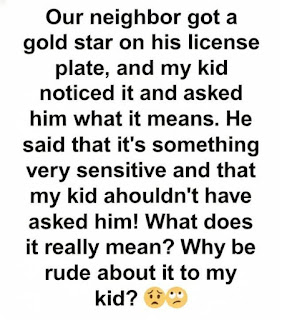
Most license plates blend into the background—letters, numbers, and a state name meant only to identify a vehicle. But every so often, one carries a symbol that stops you for a moment. The gold star is one of those symbols. It isn’t decorative, trendy, or symbolic in a casual way. It represents a family’s loss at the highest level. A gold star on a license plate means the driver is an immediate family member of a U.S. service member who died while serving the country. Without explanation or attention-seeking, it quietly acknowledges a life given and a family forever changed. For those who display it, the star keeps their loved one’s sacrifice visible in everyday life—on highways, in parking lots, and during ordinary routines that now carry extraordinary meaning.
The meaning of the gold star began more than a century ago, during World War I. As American troops were sent overseas, families looked for a way to show their connection to those serving far from home. In 1917, Army Captain Robert L. Queisser created what became known as the Blue Star Service Banner to honor his sons in uniform. Hung in windows across the country, the banner featured a blue star for each active-duty family member. It quickly became a nationwide symbol of service and hope. When a soldier was killed, the blue star was replaced with gold—one small change that carried immense weight. From that point forward, the gold star came to represent the ultimate sacrifice.
That same year, the symbol received official recognition at the national level. President Woodrow Wilson approved the use of black armbands with gold stars for mothers who had lost sons in combat. This act gave the emblem a permanent place in American remembrance. Over time, families who shared this loss sought connection with one another, leading to the formation of American Gold Star Mothers, Inc. in 1928. The organization was created to support grieving mothers, and later expanded to include all Gold Star family members. It continues to provide advocacy, comfort, and community while ensuring that fallen service members are remembered as people—not statistics.
In 1936, Congress formally recognized the importance of this sacrifice by establishing Gold Star Mother’s Day, observed on the last Sunday of September and later expanded to honor all Gold Star families. Today, many states allow eligible families to display gold star license plates as a lasting tribute. These plates are not a privilege or a badge of pride alone—they are symbols of endurance, love, and remembrance. Each gold star tells a silent story of courage and loss, reminding everyone who passes by that freedom comes at a human cost, carried not only by those who serve, but by the families who live on without them.

Dedicated and experienced pet-related content writer with a passion for animals and a proven track record of creating engaging and informative content. Skilled in researching, writing, and editing articles that educate and inspire pet owners. Strong knowledge of animal behavior, health, and care, combined with a commitment to delivering high-quality content that resonates with audiences. Seeking to leverage writing skills and passion for pets to contribute to a dynamic and mission-driven team.